2026-06-14
What dry-ageing actually does — and what 46 days means
Dry-ageing gets used as a marketing word. Here is the plain version: what happens in the chiller, why aged beef costs more, and what 46 days does to the cuts we select.
Almost every steakhouse menu in Thailand now has the words “dry-aged” somewhere on it. Very few of them explain what that means, which is a shame, because the process is not complicated and knowing it makes ordering easier.
What happens in the chiller
Dry-ageing means hanging whole, unwrapped cuts of beef in a chiller where the temperature and the humidity are both held steady. Nothing is added. Two things then happen slowly, over weeks.
The first is evaporation. Water leaves the meat. A cut can lose a noticeable share of its weight this way, and everything that is left — the fat, the minerals, the compounds that taste of beef — becomes more concentrated. This is the main reason aged beef tastes stronger than fresh beef from the same animal.
The second is enzyme activity. Enzymes that are already present in the muscle keep working after slaughter, gradually breaking down the connective tissue that makes meat chewy. That is why a well-aged steak eats softer even when it is a cut that would otherwise need work.
Why it costs more
Two reasons, and neither of them is fashion. Weight is lost to evaporation, and a hard, dark crust forms on the outside of the cut which has to be trimmed off and thrown away before cooking. You pay for the beef that was removed as well as the beef you eat, plus six weeks of chiller space.
Our dry-aged rib-eye is ฿670 for 250 g. The same cut, fresh and unaged, is ฿265 for 200 g. That gap is the ageing.
What 46 days means
Ageing is not linear. Somewhere around three weeks the meat is noticeably more tender. By six weeks the flavour has real depth. Push much beyond that and it starts developing the sharp, blue-cheese notes that beef obsessives enjoy and most people politely do not.
The cuts we select are dry-aged for 46 days. That gives them a clear, deeper flavour while keeping them easy to order for an ordinary meal.
How to order it
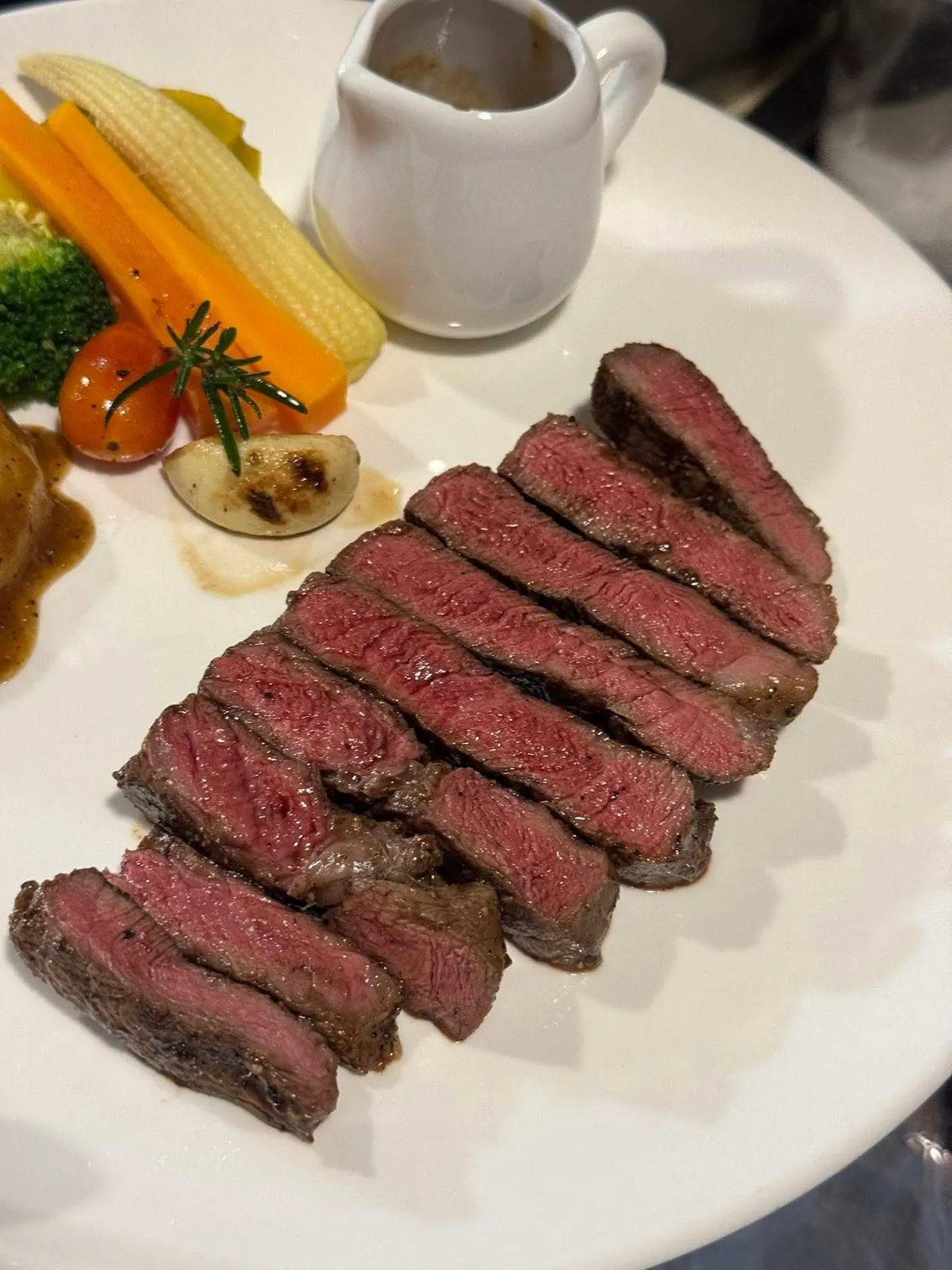
Ask for rare to medium. The ageing has already done the tenderising; cooking past medium tightens the muscle again and works against everything the six weeks achieved. If you genuinely prefer your beef well done, that is fine — order the tenderloin instead, which stays softer when fully cooked.
If you want to know which cuts are available before you commit, ask us. The farm handles the ageing; we select what is right to serve here.