2026-07-24
Why nam jim jaew belongs next to a steak
Gravy is not the only sauce for grilled beef. Why the Thai roasted-rice dipping sauce may suit dry-aged meat better than anything French.
Every steak we serve comes with gravy, because that is what people expect and it is good. But the sauce we would actually put next to a piece of 46-day beef is the one most Thai people grew up dipping grilled pork into.
What is in it
Nam jim jaew is built on four things: fish sauce for salt, lime for acid, dried chilli for heat, and toasted ground rice — khao khua — for a nutty, slightly gritty body that no European sauce has. Shallot and coriander usually go in too.
Why it works on beef
Dry-aged beef is rich. That is the whole point of the six weeks. Rich food wants acid next to it, which is why a French kitchen reaches for a red wine reduction and why we reach for lime. The difference is that jaew brings the acid without any sugar or butter softening it, so it cuts rather than coats.
The toasted rice matters more than people expect. It carries a roasted aroma that sits directly alongside the char on a grilled steak, so instead of a sauce sitting on top of the beef you get two toasted flavours agreeing with each other.
Gravy makes a steak taste richer. Jaew makes it taste like more of itself.
How to try it here
The easiest way is grilled tenderloin with nam jim jaew, ฿109 for 100 g. It is on our starters list, but it is the same beef we put on the steak plates, marinated and grilled and sliced.
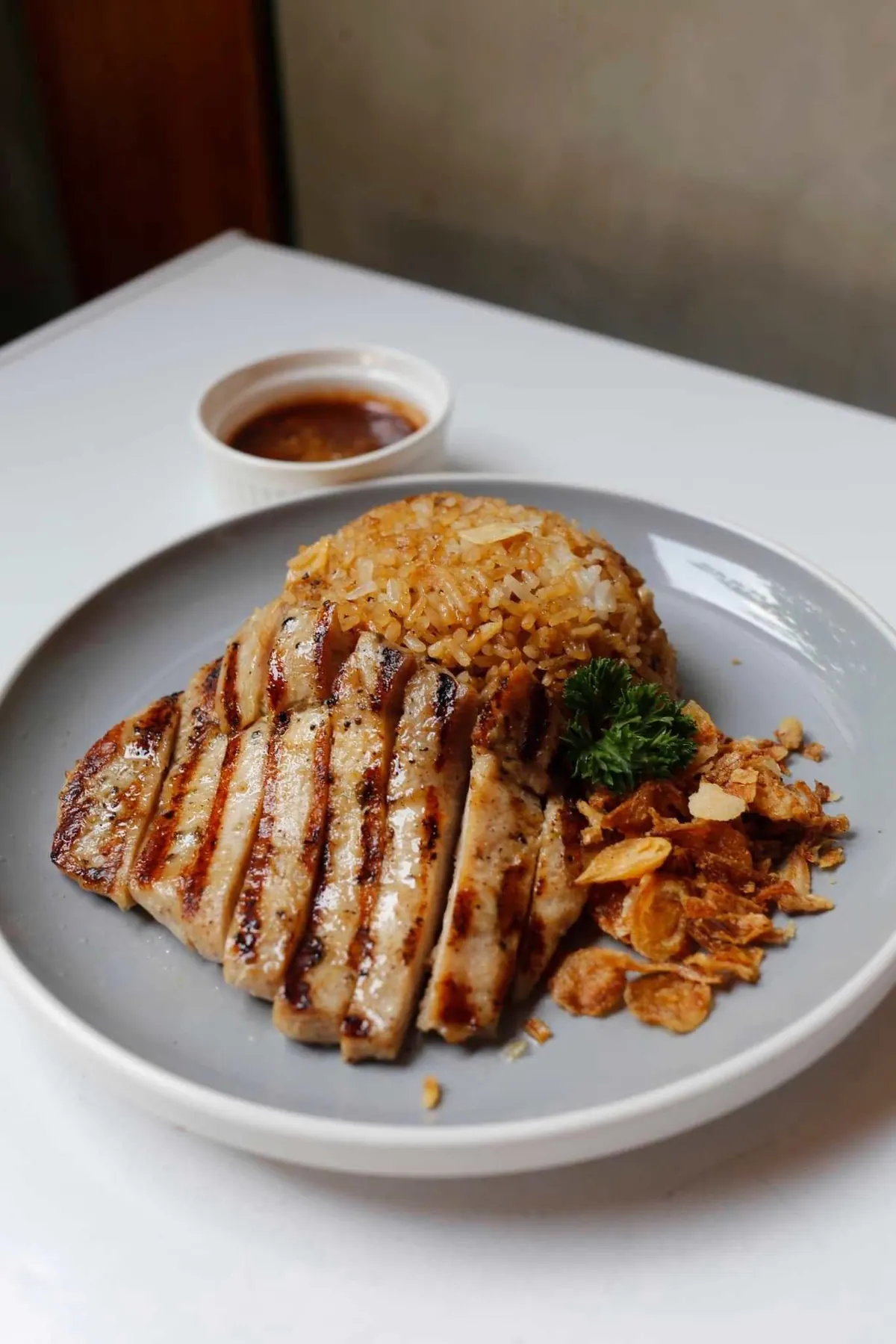
If you want a full plate, the garlic fried rice with grilled beef and nam jim jaew at ฿169 gives you the same combination with rice underneath.
And if you are already having a dry-aged steak, ask for a small dish of jaew alongside your gravy. Try one slice each way. Most people are surprised which one they finish first.